
Ceiling water damage repair in Frisco
The ceiling shows where water landed. It rarely shows where the leak started.
Call Now(972) 449-446624/7 emergency line. Free estimates from local pros.
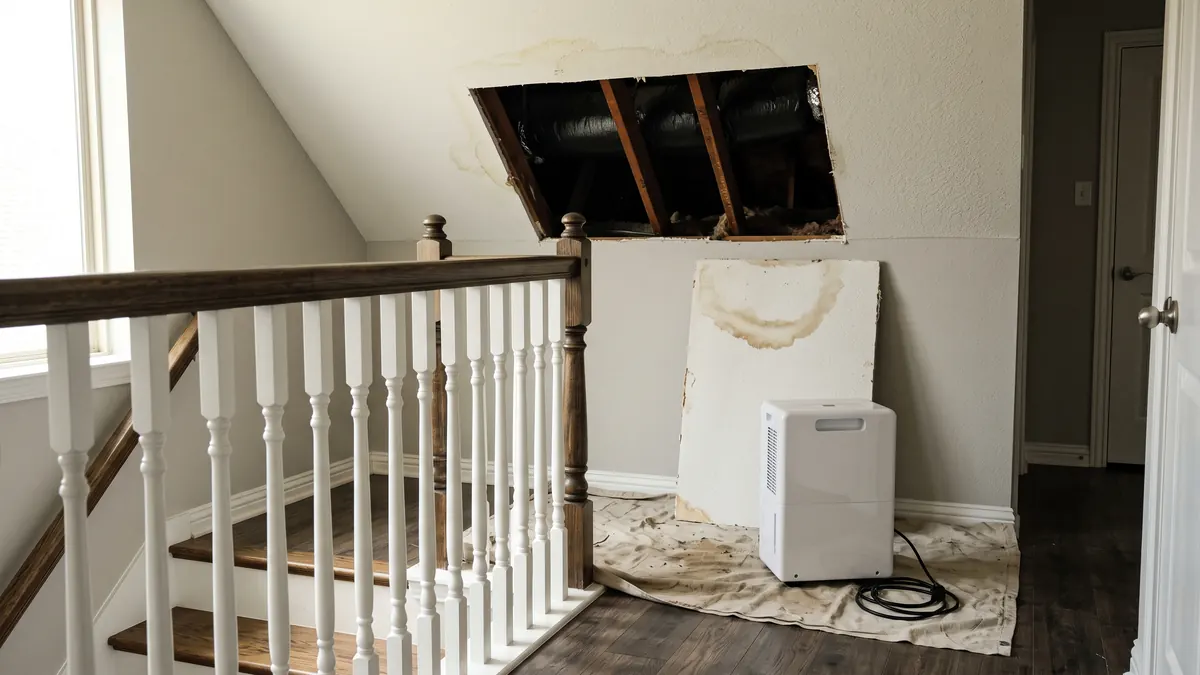
Your ceiling didn’t cause this problem. It’s just where the problem showed up, sometimes days or weeks after something above it started leaking. Fixing the ceiling without finding what’s above it just means doing the repair twice.
Leave the bulge alone
A sagging or bulging spot means water pooled inside the ceiling material, not just stained the surface. Poking it or pressing on it to drain the water can bring a chunk of wet drywall, soaked insulation, or exposed wiring down with it. Move anything valuable out from under that spot if it’s safe to reach. Call this line before you touch the bulge yourself. A local company can judge whether it’s safe to release the water in place or whether the whole section needs to come down first.
A stain that’s still spreading is still active
A dry brown ring with a hard edge usually means water that already came and went. A soft, feathered edge, or a spot that’s damp under your hand, means water is still moving somewhere above you. Mark the edge of a fresh stain with a pencil and check it again in a day. If the line has grown, the leak hasn’t stopped.
Three places usually explain it
In most Frisco houses, ceiling water traces back to one of three spots. An attic air handler can leak condensate when its drain line or pan overflows, and the AC condensate guide breaks out how that float-switch system is supposed to catch it before it ever reaches you. A bathroom directly above the stain, a shower pan, a supply line, a toilet seal, is the second usual source. A gap in the roof itself, opened by wind, age, or a hard enough hailstorm, is the third. Which one it is usually narrows down fast once someone’s actually looked at the attic.
Hail opened a path from the roof once already
On March 24, 2019, a severe hailstorm tore through Collin County, and near Eldorado Parkway one Frisco block took golf-ball-sized stones while the next block over took hail the size of baseballs. Stones that big crack tile, split shingles, and can punch straight through a skylight. None of that shows up as a ceiling stain right away. Water usually takes days or weeks to travel through decking and insulation before it ever reaches paint, which is exactly why an attic check after a big hail day matters even when the ceiling still looks clean. The storm damage page grades how a hail hit up top compares to wind-driven rain getting in some other way.
A patch rarely disappears completely
Cutting out a wet section and patching it is common, and it’s often the right call. What’s harder is matching the new texture to the old, especially on hand-applied finishes like knockdown or orange peel. A painter can get the color close and skim-coat the seam, but under the right light you may still see where the patch meets the original ceiling. Ask about texture matching before the cut starts, not after. The water damage repair page budgets out what actually gets cut versus what gets primed and repainted in place.
The ceiling is where gravity ends up
Water above a ceiling has nowhere else to go but down. An AC line, a bathroom fixture, a gap the wind or hail opened in the roof, it doesn’t matter which one caused it. Sooner or later it shows up on the one surface in the room you look at every day. Treating the stain and skipping the source just guarantees a second visit later.
Common questions
Is a brown stain still active, or old damage?
Feel the edge. A hard, dry ring usually means the water dried out a while ago. A soft edge, or a spot that's still damp to the touch, means water moved recently or is still moving. Check it again after the next rain if you're not sure which one you've got.
Does painting over the stain fix anything?
No. Paint hides the mark but does nothing about the water or the source above it. Priming and painting over an active leak just buys a repeat stain in the same spot a few weeks later. Find and stop the source first.
Should I poke a hole to drain a sagging spot myself?
Leave it alone. A bulge or sag means water pooled inside the ceiling material itself, and draining it wrong can bring wet drywall, insulation, or wiring down with it. Stand clear of the area below and let someone who's looked at it decide the safest way to relieve it.
Who handles the roof leak, a roofer or the water side?
Two different jobs. A roofer finds and seals the opening in the roof itself, whether that's a cracked tile, split shingle, or hail damage. The water damage side deals with what already got past the roof: soaked insulation, stained drywall, and drying out the space underneath.
Related pages
Appliance leak cleanup
Upstairs, a water heater or laundry line fails quietly. Downstairs, it shows up on the ceiling.
Learn more →Burst Pipe Cleanup
A burst pipe in a newer Frisco home is still a burst pipe. Here's why it happens and what to do once the water's off.
Learn more →Commercial water damage
A house can sit half-dry for a week. A business usually can't.
Learn more →Emergency water removal
Standing water in a newer, tightly sealed Frisco house has nowhere to evaporate to, so getting it out fast matters more than usual.
Learn more →Talk to a local pro now
We answer 24/7. One call gets a Frisco crew moving on your water damage, with a free estimate and help with your insurance claim.
Call Now(972) 449-4466Free estimates. No obligation to hire.